
AI Exchange @ UVA [2026.10]
Our mission is simple: to keep the UVA community informed, engaged, and inspired as we navigate this transformation together.


Innovation Spotlight: AI, Cost, and the Future of the University
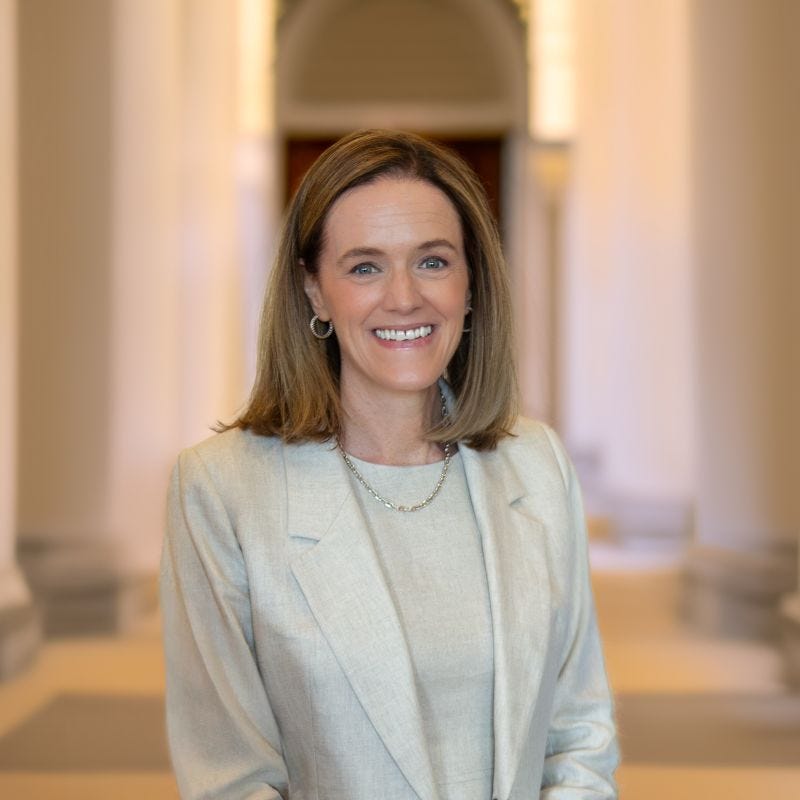
AI and the University, Innovation Without Losing Control: Kelly Doney, UVA’s Vice President and Chief Information Officer, sits at the center of the university’s AI transformation—balancing innovation with privacy, experimentation with fiscal discipline, and research acceleration with institutional responsibility. In a moment defined by rapid breakthroughs and even faster hype cycles, she’s focused on structured pilots, scalable infrastructure, and building the guardrails that allow innovation to thrive safely. For Kelly, AI isn’t about chasing trends—it’s about earning a strategic seat at the table and preparing UVA for long-term impact.
🔑 Key Insights
Higher ed is still experimenting—not fully scaling.
Despite the headlines, most universities are piloting and testing AI rather than deploying it at scale. Structured proofs of concept, not hype-driven adoption, are what separate meaningful ROI from wasted investment.Cost models and privacy risks are real constraints.
AI pricing structures weren’t built for decentralized institutions like universities, and token-based billing creates unpredictable costs. At the same time, tools that access local data or operate autonomously raise serious concerns around privacy, governance, and institutional oversight.Research computing is the quiet AI revolution.
Demand for GPUs, high-performance computing, and analytics support has exploded. UVA’s new research data center and its analytics consulting team are helping faculty translate AI curiosity into scalable, secure research capability.AI literacy may be the real inflection point.
As tools evolve, understanding what AI is and isn’t matters more than chasing the newest model. Literacy, guardrails, and disciplined experimentation will determine whether universities lead through uncertainty or get swept up in the cycle.
👉 Main idea: The institutions that balance AI innovation with clear guardrails will shape what comes next.
🚀 State of AI in the Commonwealth Report LAUNCHING:
Global & VA Economic Impact (Releasing 3/2)
AI Literacy & the Skills Gap
Teaching & Learning with AI
AI in the Workplace
AI in Research & Discovery
The Promise of AI Agents
AI predictions for 2026
The report include a panel of 12 UVA experts who give there AI predictions for 2026.
“Breakthrough in physical AI.” - Raj Venkatesan
Raj Venkatesan is the Ronald Trzcinski Professor of Business Administration at UVA's Darden School of Business, where he directs the LaCross Institute for Ethical AI in Business and the Masters in Business Analytics Program. His research focuses on marketing analytics, customer lifetime value, mobile marketing, and the global political economy.
“Universities under pressure for AI for Research” - Peter Youngs
Peter Youngs is Professor and Chair of the Department of Curriculum, Instruction and Special Education at UVA's School of Education. His research examines the effects of educational policy and school context on teaching and learning, with a focus on teacher education and induction. He is currently exploring applications of neural networks for classifying instructional activities in video.
AI Research: When AI Becomes a Research Collaborator
David P. Woodruff*, Vincent Cohen-Addad*, et al. (2026). Accelerating Scientific Research with Gemini: Case Studies and Common Techniques
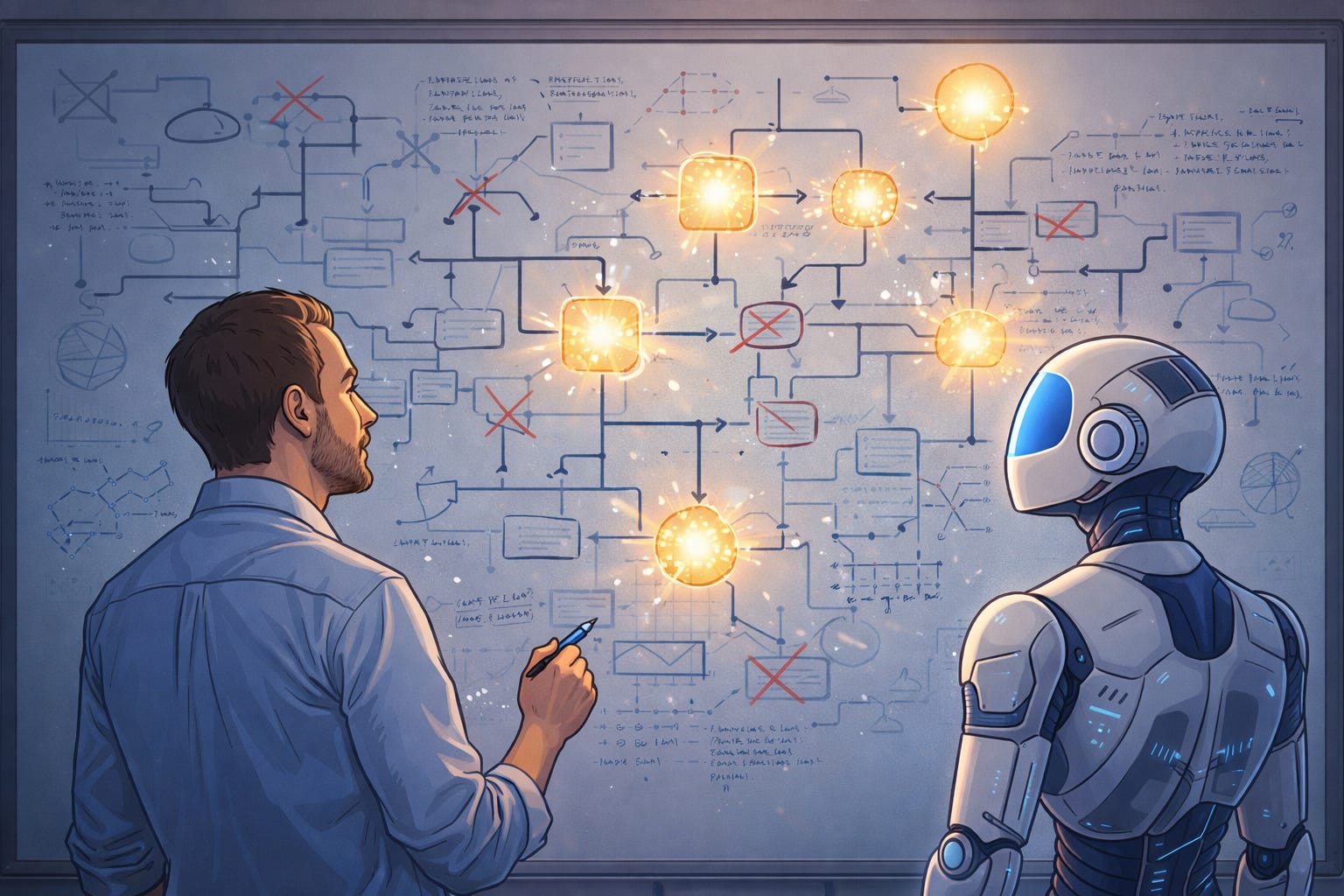
Powerful AI systems aren’t just writing emails or summarizing articles anymore—they’re helping scientists tackle real research problems. This paper shows how researchers worked with Google’s Gemini AI to solve open questions, spot hidden mistakes in proofs, and connect ideas across fields.
The key insight: AI works best not alone, but as a guided collaborator.
🧪 What they actually did
Researchers tested the AI on tough, unsolved problems in math, computer science, cryptography, and even physics. Instead of asking for one-shot answers, they:
Broke big problems into smaller steps
Asked the AI to check its own work
Had it search for counterexamples to test ideas
Even let it write and run code to verify calculations
In other words, they treated it like a very fast (and very well-read) junior research partner.
🧭 Important caveats
This is a 2026 arXiv preprint (not yet peer-reviewed).
Humans verified the results.
Success depended heavily on how the AI was guided.
Bottom line: AI isn’t replacing scientists—but it may become a powerful partner in how science gets done.
AI In The News:
🦞 What Is OpenClaw and Why Is It So Viral?
OpenClaw exploded because it’s one of the first AI agents regular developers can run locally that actually takes action (e.g., emailing, scheduling, executing code) from the chat apps they already use. It combines open source momentum, dramatic security debates, and the headline twist of its founder joining OpenAI… all within weeks. That mix of autonomy + openness + controversy made it spread fast.
🤖 A self-hosted AI agent you run on your own machine — reachable from WhatsApp, Telegram, Slack, iMessage, etc. (OpenClaw site + GitHub)
⚙️ “The AI that actually does things.” It can send emails, manage calendars, run code, and execute real tasks — not just chat.
🔐 Security is central. Because it can execute shell commands and message as you, OpenClaw publishes a formal threat model and security roadmap. (OpenClaw Trust page)
👤 Founder move: Peter Steinberger announced he’s joining OpenAI, while OpenClaw moves into a foundation to remain open and independent.
Bottom line: OpenClaw signals the shift from chatbots to autonomous personal agents and now its creator is helping shape that future from inside OpenAI.
AI Upskilling @UVA
Library Sprints — Collaborations for Research and Teaching
The University of Virginia Library invites faculty and staff to apply for Library Sprints, an intensive three to five-day program supporting research and teaching that pairs participants with teams of expert librarians, technologists, and other information specialists to advance a defined research project or pedagogical challenge. Library Sprints are designed to remove distractions, concentrate expertise, and generate tangible outcomes in a short, focused period of time.
Apply by March 2nd!
UVA Library: Practical AI Ethics
📅 Mar 18, 11:00am to 12:00pm
🎤 David Danks (Philosophy, AI, UVA School of Data Science)
A practical approach to AI ethics that yields processes and tools for designers, regulators, and users, grounded in real case studies.
AI Funding @UVA
💰 Humanities + AI Research
Schmidt Sciences’ Humanities and AI Virtual Institute (HAVI) is accepting proposals for research projects at the intersection of digital humanities and artificial intelligence.
Funding: Up to $800,000 per project
Deadline: March 13, 2026
The program supports two-way collaboration: humanities scholars applying AI tools to their research, and AI researchers gaining humanistic perspectives on data, models, and problem spaces.
Questions? Contact havi@schmidtsciences.org
AI Events @ UVA
AI + Environment Research Interest Group (RIG)
🗓 February 27, 2026 | 1:00 PM–2:00 PM | Zoom
The AI + Environment Research Interest Group (RIG) invites faculty from across Grounds to engage with innovative approaches and connect with colleagues interested in advancing climate resilience, environmental data science, and AI‑enabled modeling.
The session will feature Antonios Mamalakis, whose research integrates hydrology, climate science, and explainable artificial intelligence (xAI) to improve understanding and prediction of precipitation variability and extreme events in a changing climate.
HooHacks 2026
🗓 March 23 - 24, 2026| 24-hour hackathon
Virginia’s largest hackathon and one of the top 50 collegiate hackathons nationally. Teams compete across categories including AI/ML applications, with $10,000+ in prizes and workshops from sponsors like Google Cloud, Intel, and Capital One (Open to students 18+).
2nd Annual Cosmic Horizons Conference
🗓 July 13 - 26, 2026| Charlottesville, VA
The NSF-Simons AI Institute for Cosmic Origins (CosmicAI) is excited to announce the 2nd Annual Cosmic Horizons Conference hosted by the NSF National Radio Astronomy Observaotry (NRAO).
The recent revolution in AI is fundamentally changing how astronomers observe, explore, analyze, and model astronomical data. The Cosmic Horizons Conference aims to bring together researchers who are actively developing and applying AI/ML methods in astronomy.
Coming Soon: AI and the Environment: Seeing Impact From Both Sides
Podcast with Xi Yang, an Associate Professor in the University of Virginia’s Department of Environmental Sciences, and Lauren Bridges, an Assistant Professor in UVA’s Department of Media Studies. We will explore how AI intersects with the environment. From revealing hidden climate damage in coastal forests to examining the environmental and community impacts of data centers, their work highlights both the promise and the costs of these technologies. Together, they offer perspectives on what responsible AI research looks like as environmental challenges continue to grow.
UVA AI Resources
AI in the Curriculum Playbook: A practical framework for intentionally embedding AI capabilities into any program or course.
AI for Academic Excellence - Student Toolkit: A comprehensive guide for students on the best uses of AI.
AI Agents in Economic Research (Anton Korinek): A guide for researchers on the use of AI agents.
UVA Claude Builders Student Club: A 250+ strong group for those interested in development via Claude.
UVa AIML Seminar - Seminar featuring artificial intelligence, machine learning, and their applications.
UVA Podcasts We Listen to
Co-Opting AI: Public Conversations About Artificial Intelligence and Society:
Prof. Mona Sloane’s series Co-Opting AI is a virtual public speaker series that interrogates and demystifies AI.UVA Data Points: Podcast from the School of Data Science.
HOOS in STEM: From Prof. Ken Ono this series showcases the marvelous cornucopia of STEM at UVA, from the latest innovations to growth inside and outside the classroom.
Thanks for reading AI @ UVA Substack! Subscribe for new posts and podcasts.